
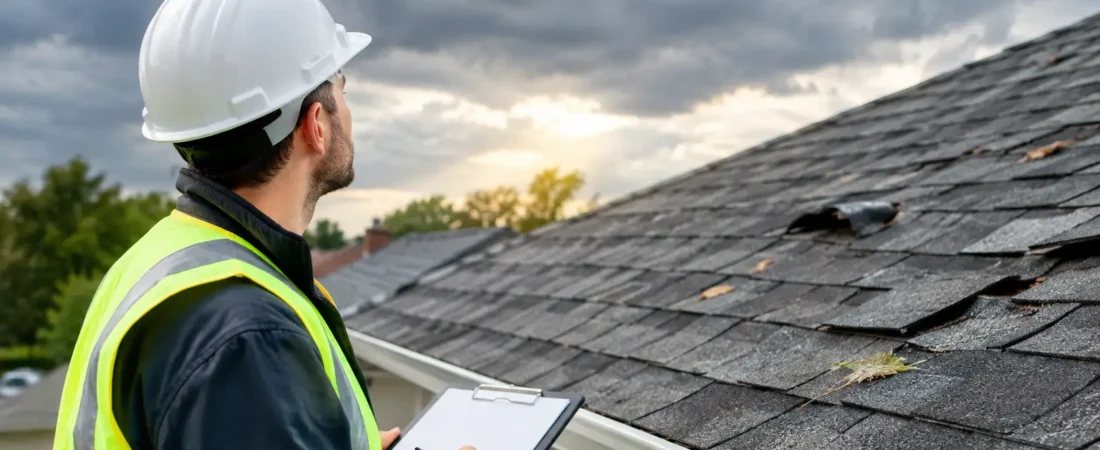
A roof emergency rarely begins with a dramatic collapse. More often, it starts with a new water mark after overnight rain, a slipped slate spotted from the ground, or debris scattered across the driveway after high winds. This emergency roof inspection checklist helps property owners respond quickly, protect the evidence, and understand when a specialist assessment is needed.
The priority is not to diagnose every issue from a ladder. It is to make the property safe, limit further water entry where possible, and gather clear information for repair decisions or an insurance claim. In Dublin and surrounding counties, wind-driven rain can turn a small roof defect into an urgent internal issue surprisingly quickly.
Start With Safety, Not the Roof
Do not climb onto a roof during or immediately after a storm. Wet tiles, slates, moss, loose debris and gusting wind make access hazardous, while damage may have weakened the surface underfoot. Keep people away from areas where tiles, slates, ridge pieces or chimney materials could fall.
If water is entering the property, move furnishings, valuables and electronics away from the affected area if it is safe to do so. Use containers to catch drips and place towels around the area to reduce spread across floor finishes. If a ceiling is visibly bulging with retained water, avoid standing beneath it or attempting to puncture it without professional guidance.
Look up from ground level and take photographs before anything is moved or covered. Wide photographs show the context of the damage; close photographs record the detail. Time-stamped images of the weather event, fallen materials and internal water marks can be useful where an insurer requests evidence.
Emergency Roof Inspection Checklist: What to Look For
A visual check from the ground, indoors and from accessible safe areas can reveal the scale and likely source of a problem. Work methodically rather than focusing only on the point where water has appeared. Water can travel along underlays, timbers and roof coverings before becoming visible.
Check the roof covering from ground level
Look for missing, slipped, cracked or displaced tiles and slates. A single missing unit can expose the roof beneath to driven rain, while a wider area of displacement may indicate wind uplift or a fixing failure. Note whether debris has collected in valleys, behind chimney stacks or at the eaves, as blocked drainage paths can force water beneath the roof covering.
On flat roofs, look for ponding water, lifted edges, split seams, punctures, blistering or loose surface material. Do not assume standing water is harmless simply because it is shallow. Persistent ponding can expose weak points and add weight to an already stressed roof structure.
Also check ridge and hip lines. Loose or missing mortar, lifted ridge tiles, cracked caps and visible gaps deserve prompt attention, especially after strong winds. These are exposed areas and may allow rain to penetrate beneath the covering.
Inspect chimneys, flashings and roof junctions
Many emergency leaks originate where different roof materials meet. From a safe viewing position, look for displaced lead flashing around chimneys, roof windows, valleys, parapet walls and abutments. Signs can include lifted edges, open laps, torn lead or mortar that has broken away from a flashing detail.
Check chimney stacks for cracked render, missing pots, loose flashing, leaning elements or debris at the base. A damaged chimney can create both water-entry and falling-material risks. It should be assessed promptly rather than treated as a cosmetic issue.
Check gutters, downpipes and drainage points
Gutters overflowing during heavy rain may be blocked by leaves, moss, slate fragments or storm debris. Look for sections that have pulled away, sagged, cracked or detached. Water escaping behind a failed gutter can soak fascias, soffits and wall junctions, making the source of dampness harder to identify.
For flat roofs, inspect visible outlets and gullies only from a safe access point. A blocked outlet may explain sudden ponding, but do not lean across an unstable roof edge or attempt risky clearance during poor weather.
Look inside the roof space and affected rooms
If there is safe access to the roof space, use a torch and look for fresh drips, wet insulation, darkened timber, daylight through the roof covering, torn underlay or water trails. Take care not to disturb wet materials unnecessarily, as this can obscure evidence and spread moisture.
Inside occupied areas, note new ceiling stains, peeling paint, damp patches around chimney breasts, dripping light fittings or a musty smell after rain. The location of an internal symptom is useful, but it is not proof of the external entry point. A specialist roof inspection traces the likely route of water rather than relying on the nearest visible stain.
Record the Details That Help Decisions
A clear record makes the next step faster, whether you need urgent repairs, a condition report or supporting documentation for an insurer. Photograph the roof from each visible elevation, the affected internal areas, any fallen materials and temporary measures taken to limit water entry.
Write down when the issue was first noticed, the weather conditions at the time, whether the leak is active or intermittent, and which rooms or areas are affected. If the property has had recent roof work, keep relevant invoices and note the approximate date. These details help distinguish a storm-related event from a longer-running maintenance concern.
Avoid discarding damaged slates, tiles or pieces of flashing until they have been photographed and, where practical, retained for assessment. Equally, do not let evidence gathering delay urgent safety measures.
Know When a Temporary Measure Is Appropriate
A temporary cover can reduce additional water entry, but only when it can be installed safely by a qualified professional. A poorly secured sheet can tear free in wind, damage the roof further, block drainage or create a danger to neighbouring property and passers-by.
Temporary measures are useful when conditions prevent an immediate permanent repair or when a detailed inspection is needed before the correct scope of work can be confirmed. They are not a substitute for identifying the cause. Covering a leak without checking flashings, valleys, roof penetrations and surrounding materials may leave the original defect unaddressed.
If water is entering rapidly, roof materials have fallen, a chimney appears unstable, or a large area of covering is missing, treat the situation as urgent. Keep clear of the affected area and arrange professional assistance without delay.
What a Specialist Emergency Roof Inspection Should Establish
An emergency assessment should do more than confirm that the roof is damaged. It should identify the type, location and apparent extent of the defect; assess whether water entry is active; and distinguish immediate risk from items that can be scheduled for planned repair.
A roof-focused inspector may use close visual examination, moisture-related observations, photographic documentation and drone imaging where weather, airspace and site conditions allow. Drone inspection can be particularly useful for high, steep or fragile roof areas, but it does not replace close assessment where a detail needs confirmation.
The resulting report should be clear enough for a property owner, managing agent, insurer or contractor to act on. Look for photographs with explanations, a description of the roof elements inspected, an indication of urgency, and practical recommendations. The best report separates observed facts from likely causes and avoids overstating what cannot be confirmed without opening up the roof.
Do Not Let a Small Leak Set the Timeline
It is reasonable to monitor a minor stain if it is dry, historic and there has been no recent weather event. It is not reasonable to wait when the stain is growing, water returns with each rainfall, or roof materials are visibly out of place. Delays can increase the repair scope and complicate any discussion about when damage occurred.
For buyers, sellers, landlords and commercial property owners, an independent roof condition report can turn an urgent concern into a decision-ready plan. Super Roof Inspector provides focused roof assessments with clear photographic evidence and recommendations designed to help you decide what needs immediate action and what can be planned with confidence.
After the weather clears, the most useful next step is a calm, documented assessment of the roof itself. Acting early protects the property, preserves the evidence and gives every decision-maker a clearer basis for the work ahead.