
A brown patch beside a chimney breast is rarely just a decorating issue. It can be the first visible result of water bypassing the roof at one of its most vulnerable junctions. The best chimney flashing warning signs are the ones that help you act before moisture reaches roof timbers, insulation or internal finishes – and before a straightforward repair becomes a wider roofing project.
Chimney flashing is designed to seal the meeting point between the chimney stack and the roof covering. It must cope with wind-driven rain, thermal movement, ageing mortar and the constant flow of water down the roof slope. In Dublin and surrounding counties, persistent rain and exposed weather can reveal a weak flashing detail quickly. Knowing what to look for helps owners, buyers, landlords and property managers decide when a specialist roof inspection is warranted.
Why chimney flashing fails
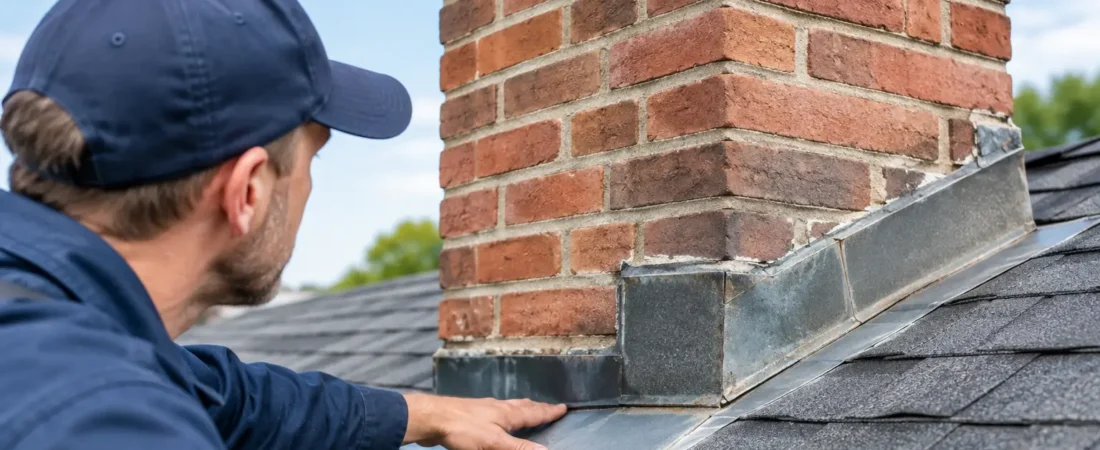
Flashing is commonly made from lead, although other materials and proprietary systems may be used. A properly formed detail normally includes soakers beneath the roof covering, an apron at the front of the chimney, side flashings and stepped cover flashings chased into the masonry joints. Each part has a job: to direct water back onto the roof rather than allowing it behind the tiles or slates.
Failure does not always mean the lead itself has split. Mortar can loosen where the cover flashing enters the chimney, tiles or slates around the stack can crack, fixings can deteriorate, or an earlier repair may have relied too heavily on surface sealant. Sealant can be appropriate in limited repair situations, but it is not a substitute for correctly installed flashing where the underlying detail has failed.
Age also matters, but age alone does not confirm a defect. An older flashing can remain serviceable if it is well dressed, secure and watertight. Conversely, a recently completed roof repair can leak if its detailing is poor.
Best chimney flashing warning signs from ground level
You should not climb onto a roof to investigate. A pair of binoculars, photographs taken safely from the ground, and internal observations can reveal enough to decide whether to arrange a professional assessment.
Damp marks near the chimney breast
Discolouration on a ceiling or wall close to the chimney is one of the clearest warning signs. Look for yellow-brown staining, bubbling paint, peeling wallpaper or a patch that becomes darker after prolonged rain. Water can travel along timbers or masonry before appearing indoors, so the stain does not always sit directly below the point of entry.
A damp patch high on the ceiling after wind-driven rain is more suggestive of a roof-level issue than a mark appearing lower down. Timing is useful evidence. Make a note of when the mark appears, whether it worsens after particular weather conditions and whether it dries between rainfall events.
Loose, lifted or visibly gapped flashing
From a safe viewing position, look for metal that appears raised, wrinkled, detached from the chimney or poorly seated against the roof. The front apron should lie neatly over the roof covering, while side flashing should follow the slope without obvious openings.
Small gaps can admit a surprising amount of water in strong winds. However, distance can be misleading: shadows, uneven slates and roof pitch can make sound flashing look irregular. This is where close-up photographic evidence from a roof inspection or drone survey is more reliable than a ground-level guess.
Cracked or missing mortar around the flashing
The upper edge of cover flashing is usually set into a mortar joint in the chimney masonry. Open joints, crumbling mortar or sections where the flashing has pulled away can create a direct route for rainwater. This deserves attention even if no internal staining is currently visible.
Repointing alone may not solve the issue if the flashing is incorrectly chased, too shallow, cracked or poorly integrated with the roof covering. The repair scope should follow the actual cause, not simply the most obvious defect.
Damaged roof coverings beside the chimney
A broken slate, slipped tile or missing piece of roof covering immediately beside the stack can compromise the flashing system. Chimney junctions contain cuts, overlaps and narrow sections of roofing material, so they are more exposed to movement and poor workmanship than broad areas of the roof.
Pay particular attention after storms. Debris on the roof, displaced tiles around the chimney and fresh fragments on the ground may indicate impact or wind damage. Photographs taken soon after the event can also support a storm damage assessment or insurance roof report where appropriate.
Signs found within the roof space
Where a roof space can be entered safely using existing access and safe boarding, look for evidence around the chimney penetration. Do not disturb insulation or walk across unsupported areas to get closer.
Fresh moisture, darkened roof timbers, water tracks on the underside of the roof covering or damp insulation near the chimney can indicate active water entry. White salt deposits on masonry may point to repeated moisture movement, although they do not establish the source by themselves. A musty smell after rain can also be a useful prompt for further investigation.
The key distinction is between old staining and an active leak. Old marks may be dry, stable and linked to a repair completed years ago. An inspection should assess moisture patterns, roof detailing and the condition of nearby coverings before treating the mark as either historic or ongoing.
When flashing is not the only likely cause
Chimneys have several weather-exposed components, and water around a chimney does not automatically mean the flashing is at fault. Defective chimney pots, damaged flaunching, open brick joints, cracked render, failed chimney caps or issues on the roof slope above the stack can all contribute.
This is why a focused roof leak investigation is more valuable than applying sealant to the first suspected gap. The aim is to trace the likely water path from the upper roof and chimney details down to the point where it appears inside. Wind direction, the type of roof covering and the stack’s position all affect that path.
For example, a leak that only occurs during heavy rain blowing from one direction may be linked to side flashing or a defective chase. A leak after steady rainfall from any direction may instead suggest water tracking beneath roof coverings above the chimney. The symptoms matter, but they need to be read alongside the roof’s construction.
What a specialist roof inspection should establish
A clear inspection report should move beyond “flashing requires attention”. It should identify the observed condition, explain the likely risk and set out proportionate next steps. For a chimney junction, that normally includes close visual assessment of the flashing, roof coverings immediately around it, chimney mortar joints, visible masonry condition and signs of water ingress.
Modern inspection methods can be particularly helpful on steep, fragile or difficult-to-access roofs. High-resolution drone images can document details that are not safely visible from ground level, while a roof condition report provides photographs and decision-ready recommendations. For buyers and sellers, this evidence can reduce uncertainty before contracts progress. For landlords, property managers and commercial owners, it supports planned maintenance rather than reactive repairs.
The recommendation may range from monitoring a minor, dry defect to localised flashing repair, replacement of adjacent slates or tiles, repointing of the flashing chase, or more extensive chimney-related roofing work. The right remedy depends on the condition of the entire junction. Replacing lead without addressing damaged surrounding slates, for instance, may not resolve the leak.
When to arrange an inspection without delay
Book a roof inspection promptly if staining is spreading, water is visibly entering during rainfall, flashing has come loose after a storm, or tiles and slates around the chimney have moved. These are active-risk signs, and delaying can allow moisture to affect a larger area than the original entry point.
It is also sensible to obtain a specialist roof assessment before purchasing a property with an older chimney stack, after significant storm exposure, or when a roof condition report identifies unclear evidence near a chimney junction. Super Roof Inspector can provide focused roof inspections and photographic reporting that make the condition and recommended action easier to understand.
A chimney is a high-risk roof detail, but it does not need to become a high-cost surprise. Acting on early evidence, and confirming the cause before repairs begin, gives you the clearest route to a dry, dependable roof.