
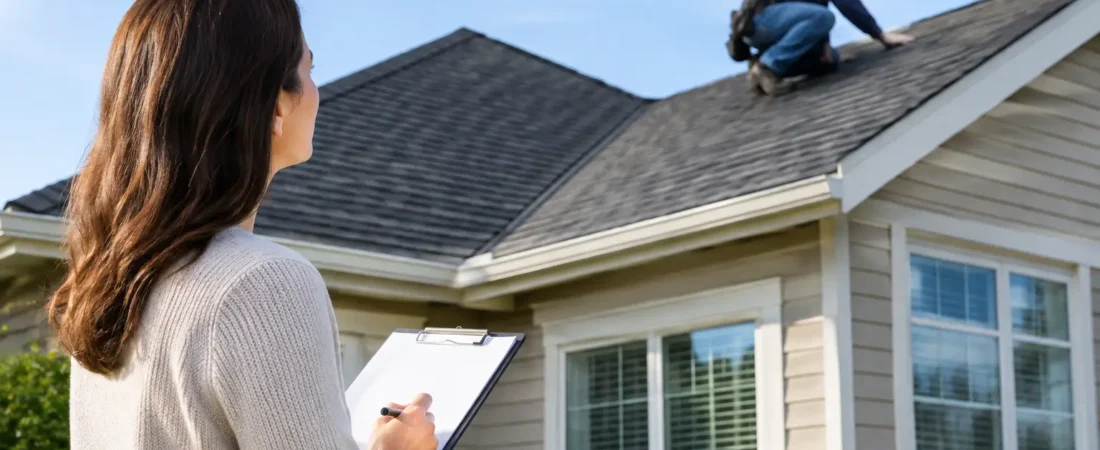
A roof inspection is most useful when the inspector can see the roof clearly, understand the reason for the visit and match visible evidence to the property’s history. This roof inspection preparation guide explains what to have ready before the appointment, whether you are dealing with a suspected leak, a sale, a purchase, storm damage or planned maintenance.
You do not need to diagnose the problem in advance or climb onto the roof. In fact, avoiding unnecessary access is the safer choice. Good preparation is simply about removing avoidable delays and giving the inspector the information needed to produce a clear, decision-ready report.
Start with the purpose of the inspection
Tell the inspector why you need the report when booking. A roof review for a buyer has a different focus from a leak investigation, an insurance claim or a maintenance inspection for a managed property. The roof covering, flashings, chimneys, gutters, valleys, roof windows and drainage details may all be relevant, but the priority areas can change.
For example, a recent water mark after heavy rain needs a timeline: when it appeared, which room or area was affected, whether it returns in wind-driven rain, and whether any repair has already been attempted. For a pre-purchase roof survey, the key question is usually condition, remaining serviceability and the likely scale of near-term work. For storm damage, photographs taken immediately after the event and the date of the weather incident can be especially useful.
A short explanation at the outset helps keep the inspection focused. It also makes the final recommendations more practical, rather than leaving you with a generic list of defects.
Make access straightforward and safe
Most of the inspection work takes place externally, often using close-up photography, drone imagery or other appropriate access methods. The inspector still needs a clear route around the property and a safe view of the roof elevations.
Before the appointment, unlock side gates where possible and move bins, garden furniture, vehicles or stored materials that block access around the building. Trim back loose vegetation only if it can be done safely from ground level. Branches pressing against tiles, slates or gutters should be visible, but do not attempt to reach roof level yourself.
If there is a locked rear yard, shared entrance, security gate or commercial site procedure, arrange access in advance. Let tenants, occupiers, a site contact or managing agent know the appointment time. For flats and multi-unit buildings, clarify which roof areas are communal and who is authorised to provide access before the inspection begins.
Safe access is not a formality. It prevents lost time, allows more complete photographic coverage and reduces the chance that a report has to rely on limited views of a key roof area.
Keep parking and drone conditions in mind
Where a drone roof inspection is planned, a nearby parking space can make equipment handling quicker and safer. The inspector may also need room to assess the site, maintain appropriate separation from people and work around overhead obstructions.
Weather can affect what is sensible and safe on the day. High winds, persistent rain, poor visibility or other adverse conditions may limit close visual or drone work. A professional inspector will not compromise safety to keep an appointment. If conditions change, clear communication and prompt rescheduling are preferable to incomplete evidence.
Gather records, but do not worry if they are incomplete
Paperwork helps establish a roof’s history, particularly where the current condition could relate to previous work. Gather any available invoices, guarantees, photographs, insurance correspondence and repair quotations. If you know when the roof covering was renewed, repaired or cleaned, make a note of the dates and the contractor involved.
Details that are often useful include the type of roof covering, whether chimney work has been carried out, when gutters were last cleared, and whether a leak has occurred before. For commercial properties, previous maintenance logs and reports can show whether an issue is isolated or recurring.
Do not delay an inspection because records are missing. Many properties have incomplete documentation, especially after a change of ownership. The roof should be assessed on the evidence available on the day. Records add context; they do not replace a detailed visual inspection.
Show evidence of leaks or water ingress
A roof leak does not always drip directly beneath the defect. Water can travel along timbers, membranes, insulation or internal finishes before becoming visible. That is why the location of staining is valuable, but should not be treated as proof of where the roof is failing.
If it is safe to do so, leave the affected area accessible. Move fragile belongings away from active drips and place a container beneath water where needed, but avoid covering stains or removing damaged material before it has been documented. Take date-stamped photographs after rainfall and keep a simple note of the weather conditions.
Tell the inspector if the issue occurs only during prolonged rain, when wind comes from a particular direction, after snow or frost, or around a chimney, roof window, valley or parapet. Small details can help distinguish between a localised defect, rainwater drainage problem, condensation-related moisture or a wider failure of the roof covering.
Do not carry out last-minute repairs
It is understandable to want a roof to look its best before a sale or to stop a leak immediately. However, cosmetic patching, fresh sealant or a hurried clean can obscure the evidence needed to identify the actual cause. It may also create a false sense of security if the underlying detail remains defective.
Emergency protection is different. If water is entering the property, take reasonable steps to limit further damage and contact a qualified roofing contractor where urgent repairs are needed. Photograph the condition first if possible, retain invoices and explain exactly what was done. This is particularly important for an insurance-related report.
Avoid pressure washing roof coverings, painting tiles, applying coatings or clearing high-level gutters just before an inspection. These actions can be unsafe, may damage certain materials and can make recent defects harder to interpret.
Prepare the right people, not just the property
A useful inspection often depends on speaking to someone who knows the building. If you cannot attend, nominate a person who can provide access and answer basic questions about the roof’s history. For a sale or purchase, agree in advance how the report will be shared and who should receive it.
Property managers should provide a contact for access issues and any known leak locations reported by occupiers. Agents can help coordinate keys and attendance around tight transaction timelines. Owners should be available by phone if there is a question that only they can answer, such as when a repair was completed or whether an issue has returned seasonally.
Super Roof Inspector focuses exclusively on roof systems, so the inspection and reporting process is centred on the roof evidence that affects your decision. Clear access, accurate background information and good-quality photographs allow the findings to be presented in plain language, with practical recommendations for repair, maintenance, further investigation or replacement planning.
Know what a good roof report should help you decide
Preparation also means being clear about the decision you need to make after the inspection. A useful roof condition report should not simply state that items are worn or damaged. It should show the relevant findings with photographs, explain the likely significance and separate urgent defects from routine maintenance or longer-term budgeting considerations.
No visual inspection can guarantee that every concealed issue will be found, particularly where roof areas are inaccessible or finishes hide the path of moisture. That limitation should be stated clearly. Even so, a thorough specialist inspection can reduce uncertainty substantially by documenting the roof’s visible condition and identifying where targeted repair work or further investigation is justified.
If you are buying, ask whether the findings are likely to affect your immediate budget or negotiation. If you are selling, ask which repairs are sensible to address before marketing and which can be disclosed with supporting evidence. If you are managing a property, use the report to prioritise work before minor defects become disruptive leaks.
The best preparation is simple: make the roof accessible, share what you know and leave the technical judgement to the specialist. That gives you the clearest possible basis for the next decision, whether it is a repair, a claim, a purchase or a planned maintenance programme.