
Winter rain in Ireland rarely arrives politely. A short spell of driving wind can force water beneath a loose slate, overwhelm a blocked gutter or expose a weak flashing detail that appeared sound in dry weather. The best winter roof maintenance tasks focus on moving water away from the roof, identifying small defects early and avoiding risky DIY work in poor conditions.
For homeowners, landlords and property managers, the goal is not to carry out a full repair programme from a ladder. It is to keep the roof performing through the season, record changes clearly and arrange a specialist roof assessment when there is evidence of failure. That approach protects the property while giving you reliable information for repair decisions, insurance matters or a planned sale.
Best winter roof maintenance tasks to prioritise
Keep gutters and outlets clear
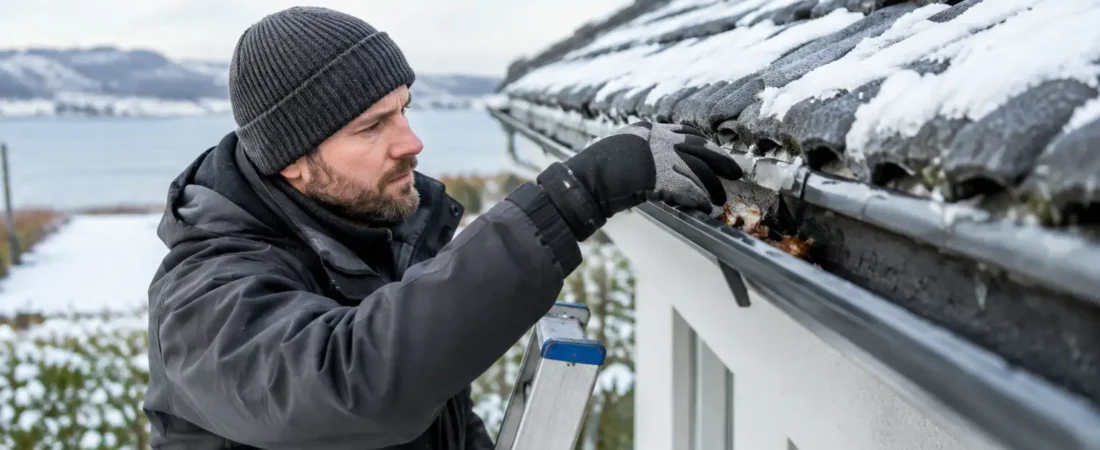
Gutters are one of the first places to check after leaf fall and before sustained wet weather. Leaves, moss, twigs and grit can collect in gutters, valleys, hopper heads and downpipes. Once an outlet is restricted, water may back up beneath the roof edge or overflow down external walls. In freezing conditions, trapped water can also add weight and contribute to cracking.
Ground-level checks are useful. Look for water spilling over gutter edges during rain, staining on walls below, sagging sections and downpipes that discharge slowly. If access is safe and appropriate, arrange for gutters to be cleared professionally rather than attempting to work on a wet, icy or wind-exposed ladder.
Do not assume a clear-looking gutter is flowing correctly. A blockage can sit inside a downpipe or at a concealed outlet. Running water should move freely away from the building rather than pooling at the roofline.
Check the roof from the ground after storms
A careful visual inspection from ground level can reveal changes worth acting on. Use binoculars where helpful and look across the roof in good daylight. You are not trying to diagnose every detail from below. You are looking for obvious movement, damage or debris that calls for closer assessment.
Pay particular attention to slipped, cracked or missing slates and tiles; lifted ridge or verge pieces; displaced flashing around chimneys, roof windows and junctions; damaged guttering; and branches or debris resting on the roof. On flat roofs, watch for standing water that remains after rainfall has stopped. Persistent ponding may point to poor drainage, a local dip or a defect affecting the roof covering.
Take dated photographs from the same position when possible. Comparing images after a storm can show whether a feature has changed, which is useful when discussing repairs or supporting an insurance claim.
Treat internal signs as roof evidence, not decoration
A brown mark on a ceiling, peeling paint near an upper wall or a damp patch around a chimney breast deserves prompt attention. These signs do not always identify the entry point. Water can travel along timbers, membranes or masonry before it appears indoors, and condensation can sometimes resemble a roof leak.
The timing offers useful clues. A patch that worsens after wind-driven rain may be linked to a defect in the roof covering, flashing or a roof penetration. A stain that changes during a thaw can indicate water trapped higher up. Note when it appeared, the weather conditions and whether it grows after rainfall.
Avoid simply painting over a stain before the source has been investigated. Cosmetic work can hide the evidence while the underlying issue continues. A focused leak investigation can identify the likely route of water entry and distinguish an isolated repair from a wider maintenance concern.
Remove loose debris without damaging the roof
Leaves and small debris are expected in autumn and winter, but larger accumulations need attention. Valleys, behind chimneys, roof intersections and flat-roof outlets are common collection points. Debris holds moisture against the roof surface and can obstruct drainage paths, particularly where moss is already present.
There is a trade-off here. Aggressive brushing, pressure washing or walking across a fragile roof can create more damage than the debris would have caused. Older slates, brittle tiles and wet roof surfaces are especially vulnerable. If debris cannot be removed safely from a suitable access point, it is better to arrange professional access and assessment.
Overhanging branches should also be considered. They can scrape roof coverings in high winds, shed leaves into gutters and provide a route for repeated impact during storms. Pruning should be planned carefully so falling branches do not strike the roof.
Inspect flashings, seals and roof junctions
The most leak-prone areas are often where materials meet: around chimneys, roof windows, vents, valleys, parapets and extensions. Flashings can loosen, split or deteriorate over time. Mortar fillets may crack. Sealants may fail, particularly after cycles of rain, frost and movement.
From the ground, look for lifted edges, open gaps, missing mortar, staining below junctions or irregular lines that suggest a component has moved. Do not rely on sealant as a universal winter fix. A temporary seal may be appropriate in a limited situation, but it cannot replace properly formed flashing or resolve defective detailing beneath the visible surface.
Chimneys deserve particular attention because they are exposed on all sides. Loose pointing, cracked flashing and displaced chimney pots can become urgent in high winds. If you see movement or fallen material, keep people clear of the area below and arrange a roof-specific inspection promptly.
What not to do during winter maintenance
The safest winter task is often knowing where to stop. Wet slates and tiles can be extremely slippery, and frost can make ladders, paths and roof surfaces hazardous. Wind affects balance and can turn a routine visual check into an avoidable accident. A roof may also look stable while concealed decay or damaged fixings make it unsafe to load.
Avoid walking on a pitched roof, using pressure washers, scraping moss aggressively or making assumptions based on a single visible defect. For example, replacing one slipped tile may not address why it slipped. The cause could be worn fixings, wind damage, substrate movement or a wider area of failing materials.
Temporary measures have their place when water is entering quickly, but they should be treated as short-term protection rather than a final repair. Clear photographs and a prompt inspection give you a stronger basis for deciding what needs to happen next.
When a professional roof inspection is the sensible next step
Arrange a specialist inspection if you have an active leak, storm damage, recurring damp marks, missing roof materials, repeated gutter overflows or a roof that has not been assessed for several years. It is also sensible before purchasing a property, placing one on the market or submitting an insurance claim where roof damage is involved.
A detailed roof inspection should move beyond a quick glance from the driveway. It can assess the roof covering, drainage routes, valleys, flashings, chimney details, roof penetrations and visible signs of wear. Drone imagery can be particularly useful where access is difficult or a high-level view is needed without unnecessary disturbance to the roof.
The value is in receiving clear findings, supporting photographs and practical recommendations. You need to know whether the issue is urgent, whether a local repair is likely to be sufficient, and what should be monitored before the next severe weather event. For properties in Dublin and surrounding counties, that clarity can be especially useful when winter storms and heavy rainfall arrive in quick succession.
Create a simple winter roof record
Keep a short record of roof-related events throughout the season. Note dates of storms, locations of internal staining, photographs of visible changes and details of any clearing or repair work. This is particularly useful for managed properties, landlords and owners who may need to explain when a problem first appeared.
A record also helps prevent confusion when more than one issue is present. A blocked gutter, for example, may cause overflow in one area while a separate flashing defect allows water into another. Treating every sign as one problem can delay the right repair.
Winter roof maintenance is most effective when it is calm, observant and timely. Clear the paths water needs to follow, watch for changes after severe weather and bring in a roof specialist before a small warning sign becomes a disruptive repair.